Every florist in the Piedmont knows the pattern. The same arrangement that lasts ten days in March lasts five in August, and nothing about the flowers changed. What changed is temperature at every step: the ride home, the room the vase sits in, and the afternoon sun through a west-facing window. Heat speeds up everything a cut flower does, including running out of water and falling apart.
The good news is that heat damage is mostly preventable, and it happens at predictable moments. This guide walks through the vulnerable points in a Gastonia summer, from the shop counter to the kitchen table, and the small habits that protect flowers at each one.
Why heat is so hard on cut flowers
A cut stem is a drinking straw with a living flower on top. Warmth makes the flower transpire faster, makes the stem drink faster, and makes bacteria in the vase water multiply faster, all at the same time. The result is a race the flower loses: the stem clogs or empties the vase before the bloom has lived out its normal span. Cool conditions slow all three clocks, which is why florists store flowers in refrigerators.
You do not need a florist's cooler at home. You need the coolest ordinary spot you have: an interior room, out of direct sun, away from the stove and the heat that pours off a television or a sunlit windowsill. Even a few degrees matter over a week. A bouquet on a shaded table in a room kept at normal air-conditioned temperatures will visibly outlast its twin on a sunny counter.
The car ride is the danger zone
The most common summer flower death in Gastonia happens in a parked car. Interior temperatures in a closed car on a 90-degree afternoon climb far past anything a flower tolerates, and fifteen minutes is enough to wilt delicate blooms beyond recovery. Petals that have cooked do not come back with water. The damage is done at the cell level before the vase is even filled.
Make the florist your last stop. If other errands remain, bring a cooler or a shaded spot in an air-conditioned car and keep the arrangement out of the trunk, which heats like an oven. On the drive, the flowers should ride in the cooled cabin, upright and out of the direct blast of the sun through the windshield. Five minutes of planning here is worth days of vase life.
Water strategy for hot weeks
In summer, check the water daily instead of every other day. Warm rooms empty vases faster, and a vase that runs dry for an afternoon spends the flower's remaining life. Top up with cool water, and do the full change, rinse, and stem trim every two days without exception. Warm vase water goes cloudy faster than winter water, and cloudy water is the countdown accelerating.
Foam arrangements need the same attention in the other direction: the foam should stay damp, so pour a little water into the center of the arrangement daily and let it soak in. A foam block that dries out completely is hard to rewet evenly, and the stems in it will wilt while the arrangement still looks structured from a distance.
| Situation | What heat does | The fix |
|---|---|---|
| Parked car, summer afternoon | Cooks petals beyond recovery in minutes | Florist last, cooled cabin, never the trunk |
| Sunny west window | Doubles the speed of opening and fading | Interior room, out of direct sun |
| Warm vase water | Bacteria multiply and clog stems | Full water change every two days |
| Foam arrangement in a heat wave | Foam dries and will not rewet evenly | A little water into the center daily |
Choosing summer-tough flowers
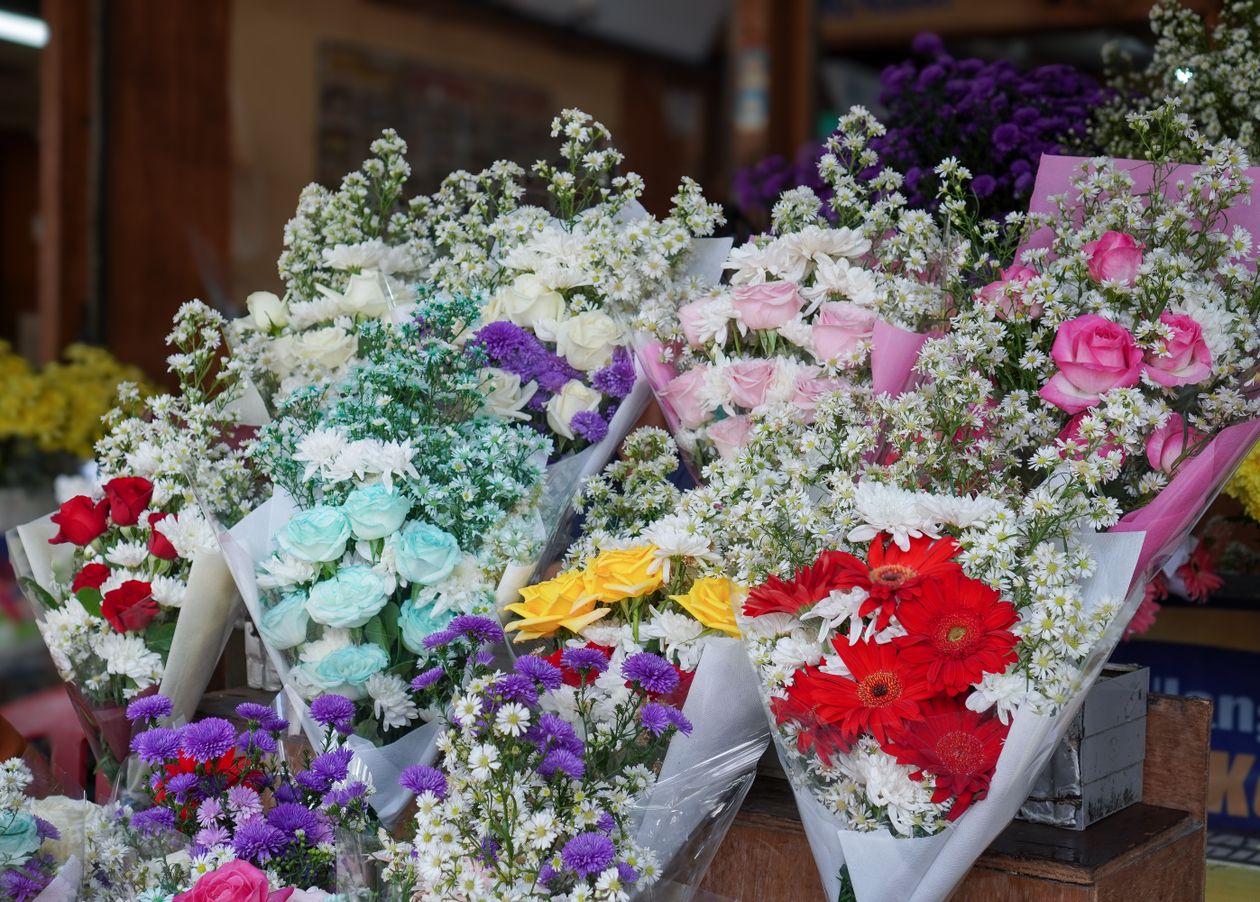
Some flowers shrug off heat better than others, and a summer order goes further when it leans on them. Chrysanthemums, carnations, and alstroemeria hold up well in warm rooms. Zinnias and sunflowers, grown for summer, handle the season they came from. Delicate spring flowers like tulips and sweet peas, shipped in from cooler climates, struggle in a Piedmont August and will not last no matter how well they are handled.
If you are sending flowers to someone whose house runs warm, or to a porch delivery in the country outside Gastonia where the arrangement may sit outside for an hour, say so when you order. The florist can weight the mix toward hardier stems, choose a design that travels in water, and time the delivery for morning, when porches are still shaded and cool.
Reviving a wilted arrival
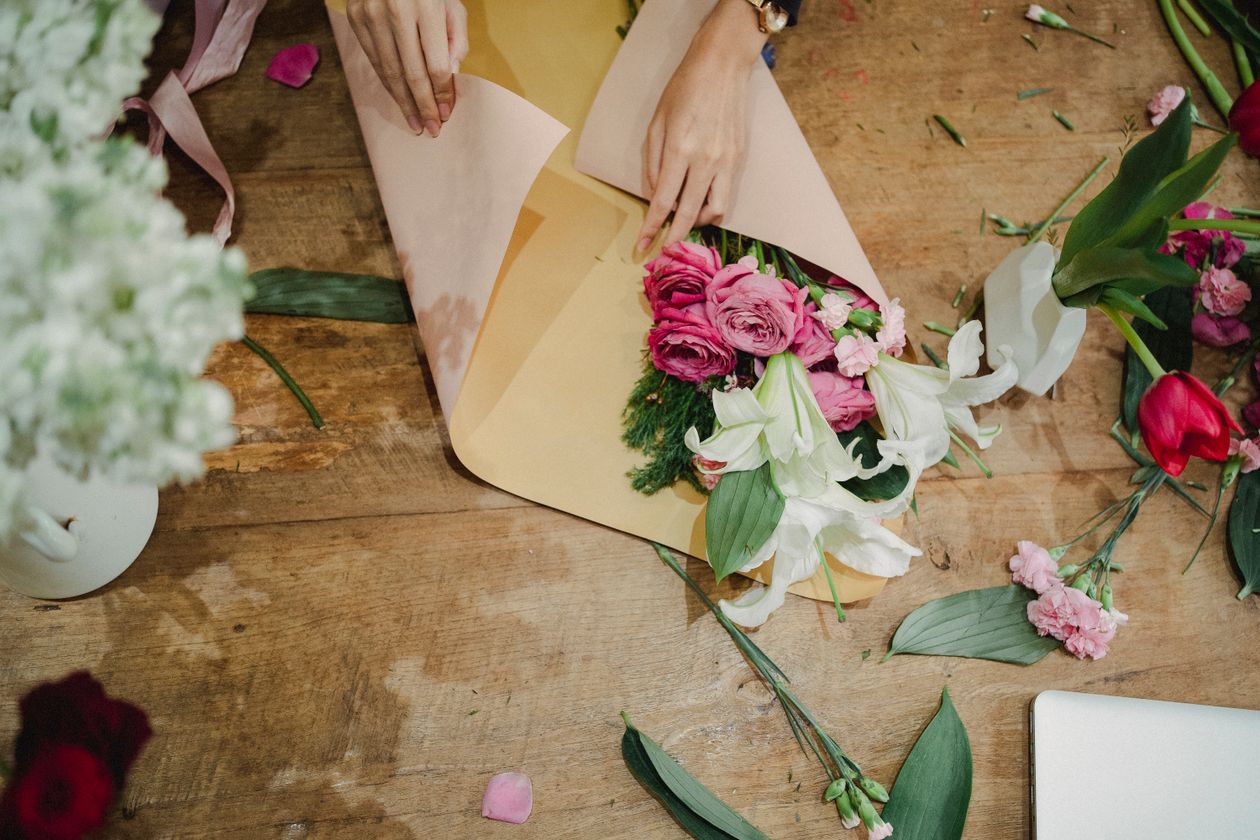
A bouquet that wilts in its first day has usually suffered heat or thirst, and some of it can be saved. Recut the stems at an angle, stand the whole arrangement in deep cool water in the coolest room you have, and give it several hours. Roses and hydrangeas in particular sometimes recover fully from a dramatic wilt, because the problem was water delivery, not age.
What cannot be revived is a cooked petal or a finished bloom. Trim away what is clearly done, keep the survivors in clean water, and let the arrangement continue smaller. Summer shortens every bouquet's run, but attention at the three vulnerable points, the car, the room, and the water, closes most of the gap between a March bouquet and an August one.
Common questions
Can I put flowers in the refrigerator overnight?
A home refrigerator helps for a night if there is room and no ripening fruit inside, since fruit gives off gas that ages flowers. Cool room air is usually enough for most arrangements.
Why did my flowers wilt in one afternoon?
Heat is the usual cause in summer, especially a hot car ride or a sunny windowsill. Recut the stems and stand the flowers in deep cool water for a few hours before giving up on them.
What flowers hold up best in summer heat?
Chrysanthemums, carnations, alstroemeria, zinnias, and sunflowers are among the hardiest in warm rooms. Delicate spring flowers shipped from cooler climates fade fastest.
Photos in this guide are representative stock images.
← All guides from Fine & Fancy Flowers← Back to Fine & Fancy Flowers