Sympathy flowers carry two different jobs and people often try to make one arrangement do both. Flowers for the service need to be there before the visitation, stand up in a crowded room, and read clearly from a distance. Flowers for the house arrive into a quieter week, need to fit on a kitchen table, and get looked at up close for days. The timing, the size, and even the container are different decisions.
This is the order most Gastonia families and senders actually face, usually on a day when nobody is thinking clearly. A local shop like Fine & Fancy Flowers handles these orders every week, and the pattern that works is simple: decide the destination first, then the timing, then the flowers themselves.
Step one: name the destination
The funeral home or church is the right destination when you knew the person who died, when the family is large and receiving many people, or when the obituary names a service time and place. Standing sprays, wreaths, and casket pieces belong to this setting. They are built on easels or in baskets meant to be seen in a room, not carried home and put on a table, although families often do take baskets home afterwards.
The house is the right destination when you know the family better than you knew the person who died, when there is no public service, or when the service has already passed. A vase arrangement or a plant suits a home. It does not need to be moved, watered by strangers, or fitted into a crowded display, and it lands in the week after the service, which is when the house gets quiet and support thins out.
Step two: get the timing right
Service flowers are on a deadline the sender does not control. Order as soon as you know the service time, and give the florist the funeral home name and the visitation start, not just the funeral hour. Arrangements need to be in place before the family arrives, and a shop delivering several pieces to the same service needs the full picture. Same-day ordering is sometimes possible in the morning for an evening visitation, but it narrows the choices.
Home flowers have the opposite logic. Sending them the day after the service, or two days after, is not late. It is often the best-timed gift in the whole sequence, arriving when the out-of-town relatives have left and the refrigerator full of casseroles is running down. If you missed the service entirely, a home arrangement a week later with a short note is still welcome. Grief does not run on the schedule the flowers do.
Step three: pick the flowers
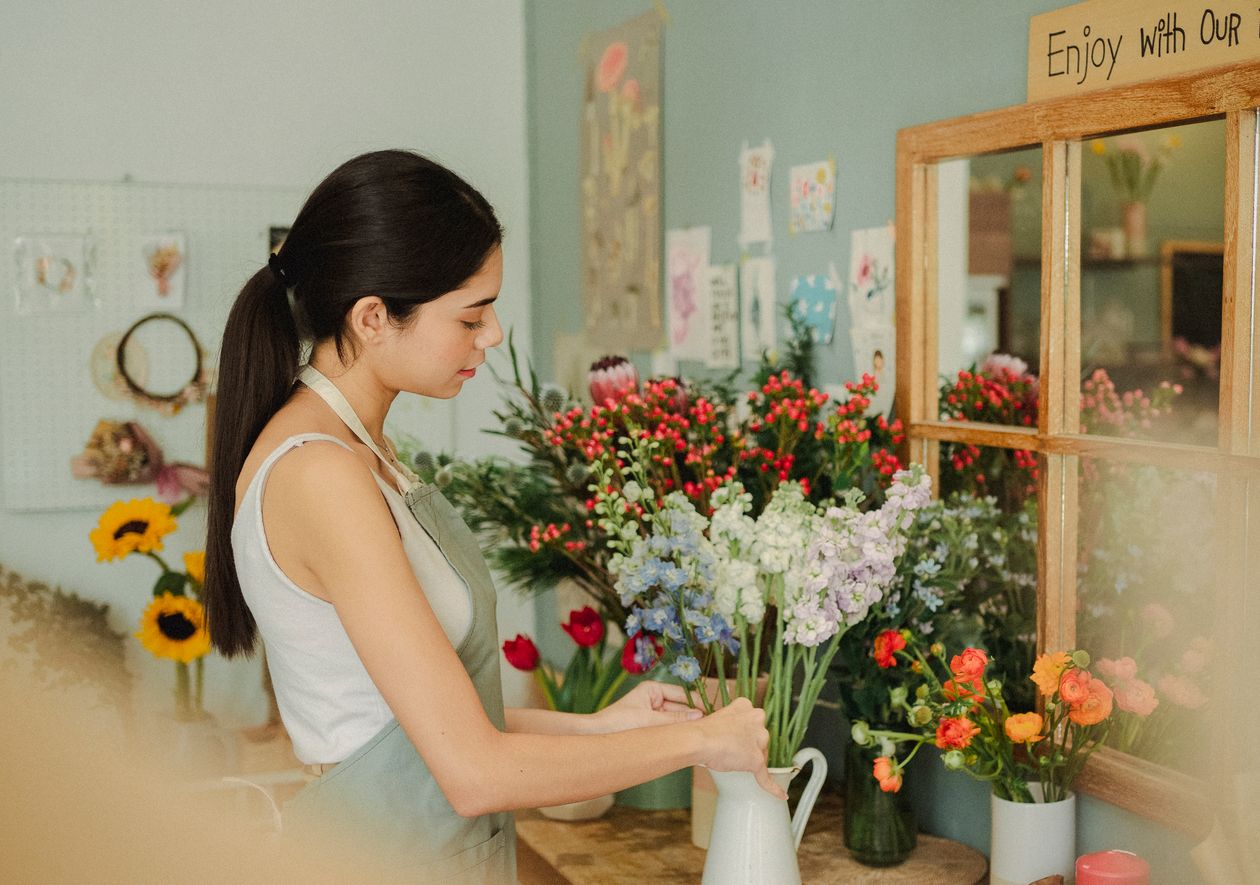
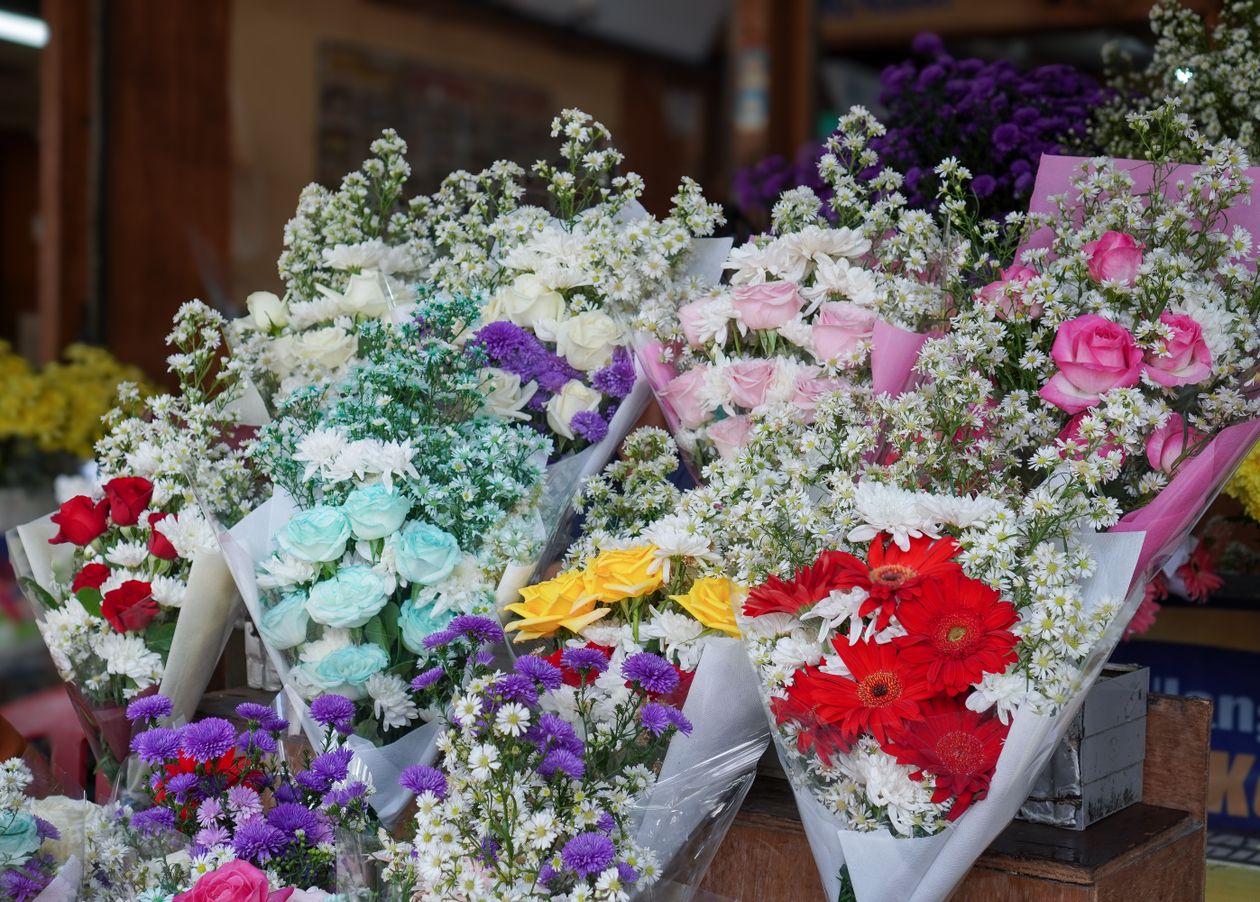
White and soft colors dominate sympathy work for a reason: they read as calm in a room full of people and they photograph gently against dark clothing and wood. White lilies, roses, and chrysanthemums are the traditional backbone. That said, color is not wrong. If the person who died gardened, wore bright colors, or would have hated a funereal room, a colored arrangement that sounds like them is the more honest choice, and families notice the thought.
For the home, think about upkeep. A grieving household will not change vase water every two days. Long-lived flowers like chrysanthemums and carnations, or a flowering or green plant that asks almost nothing, respect the reality of that house better than a delicate arrangement that needs daily attention. Size down, too. A modest vase that fits the table beats a large piece that has to be moved every time someone sets down a plate.
- Name the destination. Service or home. That single choice decides the size, the style, and the deadline.
- Set the timing. Service pieces must land before visitation. Home pieces often land best a day or two after.
- Pick for the setting. Standing pieces for the room, long-lived vase flowers or a plant for the house.
- Write the card slowly. It is the part the family keeps. One true line and your full name.
- Send and step back. After sending, a short call or visit the following week means more than a second arrangement.
The card is the part that lasts
Families keep the cards. Long after the flowers are gone, the card goes in a drawer or a memory box, which makes the two lines on it the most durable part of the gift. Write the person's name. Say one true, specific thing if you have one: a kindness, a laugh, a way they showed up. Then sign your full name, and add how you knew them if the family may not place you, because at a large service the family reads dozens of cards from people they have never met.
If you do not know what to say, a plain line said honestly beats a borrowed verse. Thinking of you and your family has carried thousands of these cards because it is true and it asks nothing. Avoid promising help you will not give. If you write that you will call next week, call next week. The card is a record, and the family will remember it accurately.
What to do about donations and requests
Many obituaries ask for memorial contributions instead of flowers, and that request deserves respect rather than competition. A common middle path is to make the contribution and, if you are close to the family, send a small arrangement to the house rather than a large piece to the service. The family gets the donation honored and still has something living in the house during the quiet week.
If the obituary names a charity, say so on your card in one line, so the family knows the gift was made. And if you are ordering for a whole office or group, one good arrangement with every name on the card reads better than five small ones competing on the same table. Pool the money, send one piece, and sign it together.
Common questions
Is it too late to send flowers after the funeral?
No. An arrangement sent to the home in the days or week after the service is often the best timed of all, arriving when visitors have gone and the house has gone quiet.
Should sympathy flowers be white?
White is traditional and safe, but not required. Flowers in the colors the person loved can be the more thoughtful choice, especially for arrangements going to the home.
What should I write on the card?
Keep it short and true: the person's name, one specific memory or kindness if you have one, and your full name with how you knew them if the family may not know you.
Photos in this guide are representative stock images.
← All guides from Fine & Fancy Flowers← Back to Fine & Fancy Flowers