Couples usually meet a florist with a folder of saved photos and no sense of which questions come first. The honest answer is that wedding flowers have a natural order. A few decisions lock early because everything else hangs on them: the date, the venue, the size of the wedding party, and the overall style. The rest, down to the exact rose variety, can and should wait, because flowers are seasonal and tastes drift over a long engagement.
Gastonia couples planning weddings around the Piedmont also have the weather to plan around. A June wedding and an October wedding in this region use different flowers, tolerate different heat, and need different handling on the day. Here is the sequence that keeps the planning calm.
Six to nine months out: book the shop
Popular wedding dates in the Charlotte and Gastonia area book florists early, and spring and fall Saturdays go first. Once the venue and date are set, the florist conversation can start, even before colors are final. What the florist needs at this stage is the date, the ceremony and reception locations, a rough guest count, and the size of the wedding party. That is enough to hold the date and build a working estimate.
Bring the photos, but hold them loosely. A saved image tells a florist about your taste in shape and color far better than it predicts the exact flowers available that month. The couples who get the prettiest results usually describe the feeling and the colors, then let the florist translate that into what is actually in season and in good condition that week.
Four to six months out: settle the structure
This is when the list gets built: bridal bouquet, attendants' bouquets, boutonnieres, corsages, ceremony pieces, reception centerpieces, and any extras like a flower girl basket or cake flowers. Count carefully. The wedding party list changes more than any other detail, and every change moves the flower count. Lock the party size before you fall in love with a per-person design.
Ceremony flowers deserve a second look at this stage for a practical reason: many of them can move. Aisle arrangements can go to the reception tables, and a ceremony backdrop piece can sit behind the head table. Designing pieces that work in two places is the single most effective way to stretch a flower budget without cutting anything guests will notice.
Two to three months out: colors and substitutions
By now the dresses are chosen and the color palette is real, so the florist can match flowers to fabric rather than to a phone screen. Bring a swatch or a photo of the dresses in daylight if you can. This is also the visit where you agree on substitutions. Flower crops fail, shipments get delayed, and a specific variety may arrive in poor condition the week of the wedding. Agreeing in advance on acceptable swaps, by color and shape, prevents a stressed phone call two days before.
Decide the practical pieces in this window too: who pins the boutonnieres, where the bouquets live during photos, and what happens to the arrangements at the end of the night. Venues around Gastonia often require everything out the same evening, so knowing which centerpieces go home with guests and which containers must be returned saves a chaotic last half hour.
- Date and venue locked before the florist conversation starts
- Wedding party size counted and confirmed
- Ceremony pieces designed to move to the reception where possible
- Dress colors shared with the florist as photos or swatches
- Substitution rules agreed in writing before the wedding week
- Delivery addresses and room access times confirmed
- A named person in charge of receiving the personal flowers
- A plan for the arrangements when the night ends
The final month: confirm counts and timing
The last florist meeting or call is a logistics pass, not a design pass. Confirm the final guest count and table count, because centerpieces are ordered against it. Confirm delivery addresses and times for each stop: where the personal flowers go, when the ceremony site opens, and when the reception room can be entered. A florist running three deliveries on one morning needs those windows in writing.
Also confirm the heat plan if yours is a warm-month wedding. In a Piedmont summer, bouquets should stay in air conditioning and in water until the last responsible moment, and ceremony pieces set outdoors too early will fade before the guests sit down. A good florist will already be planning around this, but saying the schedule out loud together catches the gaps.

The week of, and the day itself
Flowers are conditioned, arranged, and finished in the last two or three days. Expect the design to look slightly fuller and looser than the photos you saved, because real stems curve where they want to. Hand the personal flowers to a designated person, not to whoever happens to be near the door, and keep a small towel handy, since stems coming out of water drip on dresses.
After the wedding, the bouquets have a short second life. Get the bridal bouquet back into water at the reception if you hope to keep or dry it, and decide that night which arrangements go home with family. The flowers were bought for one day, but with a little water and shade, most of them will still look good at brunch the next morning.
Common questions
How far ahead should we book a wedding florist?
For spring and fall Saturdays in the Gastonia area, six to nine months ahead is a sensible target. Shorter timelines are often possible, but the date may already be taken.
What does the florist need at the first meeting?
The date, the ceremony and reception locations, a rough guest count, and the size of the wedding party. Colors and exact flowers can come later.
Can ceremony flowers be reused at the reception?
Yes, and it is one of the best ways to stretch a budget. Aisle pieces often move to tables and ceremony backdrops to the head table, if the move is planned in advance.
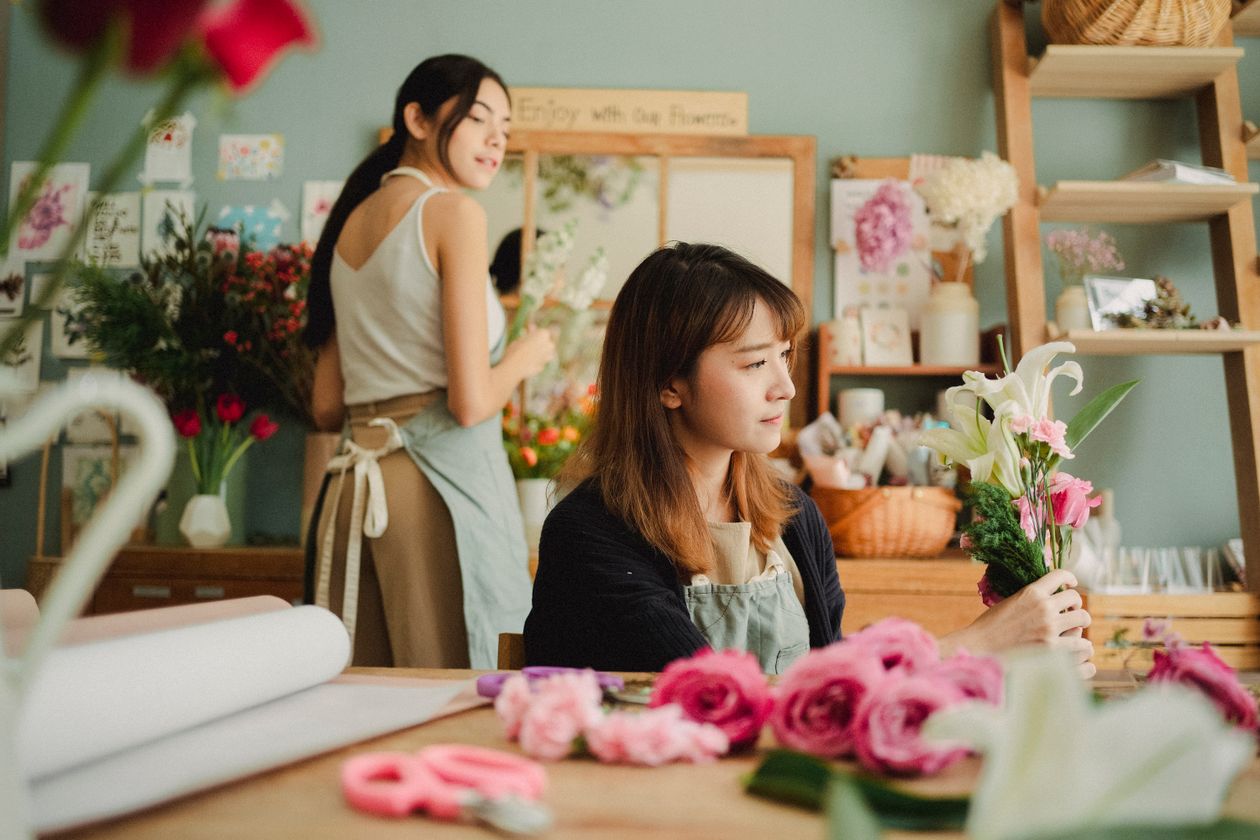
Photos in this guide are representative stock images.
← All guides from Fine & Fancy Flowers← Back to Fine & Fancy Flowers